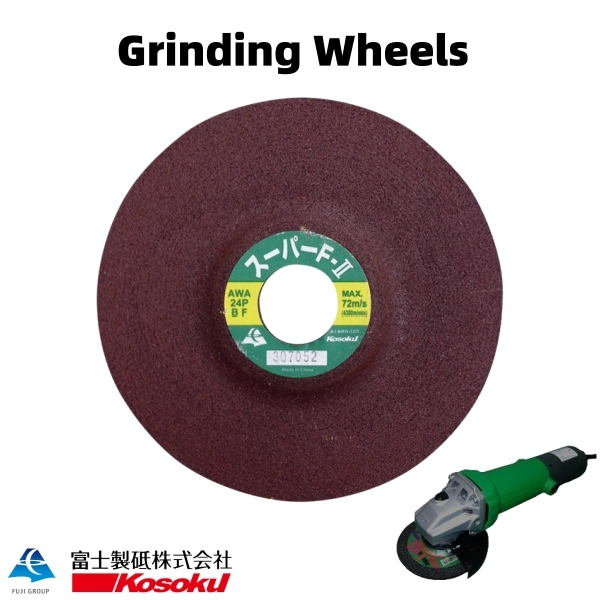
Efficient, durable, and professional grinding tools have become vital in advanced metalworking processes. Among the most dependable solutions, FUJI grinding wheels stand out for their innovative design and exceptional performance.
This blog explores how FUJI grinding wheels, such as the 7”/180mm metal grinding wheel (Super F-II), are applied across various industrial and metalworking functions, ensuring precision and productivity.
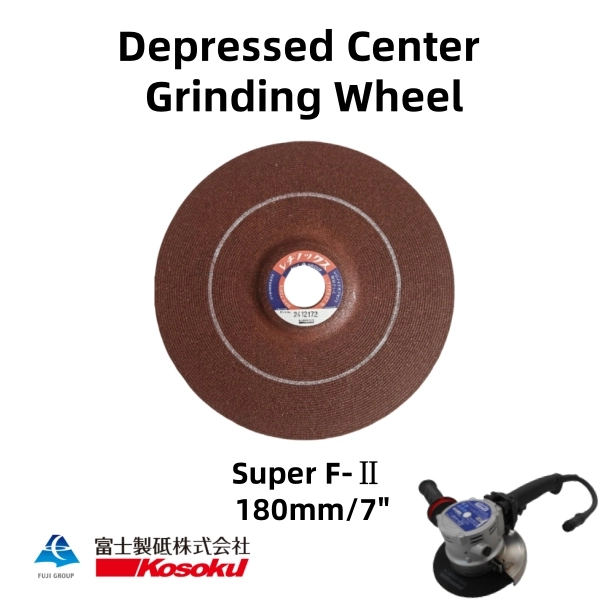
Automotive and industrial workshops demand tools capable of handling challenging tasks, and FUJI grinding wheels have risen to the occasion. These grinding wheels excel in demanding environments due to their depressed center grinding wheel design (Type 27).
This geometry ensures stability and safety during heavy-duty grinding by allowing the locking nut to sit flush within the wheel. Automotive workshops frequently use FUJI wheels to address repair and maintenance needs, such as grinding down chassis welds or smoothing out surface imperfections. Similarly, industrial workshops rely on FUJI wheels to process general steel and cast iron, thanks to their unmatched durability and capacity for rapid material removal.
All Super F-II series wheels are manufactured in compliance with Japanese JIS R 6242 industrial standards and meet European EN 12413 safety regulations. Built with double fiberglass reinforcement and a maximum peripheral speed of 72 m/s, they deliver outstanding operational safety even under continuous heavy use.
Maintenance, repair, and operations (MRO) teams need reliable tools to manage ongoing tasks effectively. FUJI grinding wheels cater to these needs by offering cost-efficient performance and long-lasting results that reduce downtime.
MRO teams benefit from reduced operator fatigue thanks to the balanced core technology of FUJI grinding wheels. A balanced wheel vibrates less, allowing for prolonged use with minimal effort and effectively lowering the risk of Hand-Arm Vibration Syndrome (HAVS). From maintaining machinery to performing structural repairs, the premium construction ensures precision and consistency in every application.
Field tests across industrial facilities prove that FUJI grinding wheels reduce replacement frequency by up to 30% compared to standard abrasive discs during daily operation, cutting operational costs and boosting overall productivity for MRO departments.
Proper surface preparation is crucial to achieving strong, secure welds, and this is where FUJI grinding wheels truly shine. With advanced Japanese precision engineering, FUJI grinding wheels ensure smooth surface leveling and weld seam removal.
Fabricators often choose FUJI's 180mm grinding wheels for tasks like deburring sharp edges or beveling plates (creating a V-groove), ensuring the surface is primed and ready for welding penetration. Coarse grit 24 works best for heavy stock removal, while grit 36 is recommended for standard weld preparation.
Additionally, these wheels perform well for rust and mill scale removal before painting or further surface treatments, making them a versatile tool for the entire metal fabrication workflow.
Construction sites and fabrication projects demand high-performance tools that can handle heavy-duty tasks. FUJI grinding wheels are trusted by construction professionals worldwide for their ability to deliver consistent results under extreme conditions.
| Feature | Standard Wheel | Fuji Super F-II |
|---|---|---|
| Removal Rate | Moderate | High (Aggressive Cut, +40% Material Removal) |
| Wheel Life | Standard | Extended (Durable Bond, +30% Longer Service Life) |
| Vibration | High | Low (Precision Balanced) |
| Application | General DIY | Heavy Industrial / Shipyards / Foundries |
| Safety Standard | Minimum Compliance | Exceeds EN 12413, Burst Factor over 2.0x |
Ideal for use with materials like structural steel and cast iron, these grinding wheels remove excess material quickly, streamlining workflows and improving productivity. Additionally, their reinforced construction and safety-first design ensure reliable operation, even in high-stress environments such as shipbuilding or large-scale infrastructure projects.
They are widely used in foundries for removing sprues and cleaning castings. Even on hard, brittle cast materials, FUJI wheels maintain steady cutting performance without chipping or breakage.
The superior performance of the Super F-II series comes from three core technical features developed with Japanese precision manufacturing:
To get the best results, match your grinding wheel to workpiece material and working purpose. The table below helps you make the right selection:
| Abrasive Type | Code | Recommended Materials |
|---|---|---|
| Brown Alumina | A | Mild steel, carbon structural steel |
| White Alumina | WA | Alloy steel, tool steel, stainless steel, precision grinding |
| Blended Alumina | AWA | General metal, steel + cast iron (Universal use) |
| Zirconia Alumina | AZ | Hard alloys, heavy stock removal, continuous operation |
| Silicon Carbide | C / GC | Cast iron, non-ferrous metal, carbide |
For grit selection: Coarse grit (24–36) for fast stock removal and rough preparation; medium grit (46–60) for general grinding work; fine grit (80–120) for surface finishing and precision tasks.
Proper storage and handling are critical for safety and service life of resin-bonded grinding wheels. Follow these rules in line with JIS and EN standards:
A: No. Depressed center grinding wheels (Type 27) are designed for face grinding. Using them for cutting (on their edge) applies side pressure that can cause the wheel to shatter. Always use a proper T41 Cut-Off Wheel for cutting tasks.
Q: What safety gear is required?A: Always wear a face shield, safety glasses, heavy gloves, and hearing protection. Ensure the grinder's safety guard is properly installed and positioned between you and the wheel. For dusty work, a respirator is also recommended.
Q: What is the best angle for using a depressed center grinding wheel?A: For optimal material removal and safety, maintain a grinding angle of 15° to 30°. This utilizes the reinforced face of the wheel without digging into the workpiece.
Q: Why is the 180mm (7-inch) size preferred for heavy fabrication?A: The 180mm size offers a perfect balance of surface area coverage and manageability. It removes material faster than smaller 100mm discs while being lighter than 230mm tools, reducing operator fatigue.
Q: Can Fuji wheels be used on cast iron?A: Yes, the Fuji Super F-II series is engineered with a bond matrix specifically designed to handle the hardness of cast iron as well as general structural steel.
Q: Which abrasive grains work best for stainless steel grinding?A: For stainless steel (INOX), choose grinding wheels with White Alumina (WA) or Zirconia Alumina (AZ). They prevent surface contamination and thermal discoloration. The FUJI JITAN series with AZ grains delivers extra cooling performance.
By integrating innovation, durability, and efficiency, FUJI grinding wheels remain an indispensable tool for industrial applications. Whether it’s automotive repair, MRO tasks, surface preparation for welding, or heavy-duty construction, FUJI helps professionals achieve top-tier outcomes with minimal effort. With advanced features like a self-sharpening design and ergonomic efficiency, FUJI grinding wheels redefine what it means to work smarter in metalworking.