Choosing an industrial angle grinder involves more than selecting motor power. Wheel diameter, power source, operating speed, duty cycle, workpiece access, abrasive compatibility and the working environment all influence grinder selection.
This guide explains the key factors to consider when selecting electric, pneumatic and high-frequency grinding equipment for metal fabrication, shipbuilding, foundries, structural steel, construction and industrial maintenance.

An industrial angle grinder is a portable power tool used for grinding, cutting, weld dressing, deburring, surface preparation and controlled material removal. The machine is typically selected as part of a complete grinding system rather than as an isolated piece of equipment.
For professional metalworking, grinder selection should consider the relationship between the machine, abrasive wheel, operating speed, workpiece and production conditions. A compact grinder may be preferable for restricted access, while a larger machine can support a larger abrasive wheel for demanding material-removal work.
Professional grinding operations do not always require the same machine configuration. FUJI KOSOKU provides several industrial grinding formats because wheel access, power supply and production requirements can vary significantly between applications.
Corded electric angle grinders are suitable for workshops, fabrication facilities, maintenance operations and other locations where electrical power is readily available.
Pneumatic or air angle grinders use compressed air and can be useful in facilities with centralized air systems. They are particularly relevant to shipyards and heavy fabrication.
High-frequency systems combine dedicated motors with specialized power equipment for demanding industrial grinding applications. FUJI offers 250 Hz, 300 Hz and 400 Hz equipment.
Die grinders and straight grinders provide additional access options for detailed deburring, narrow cavities, internal surfaces and finishing work that may not suit a conventional angle grinder.
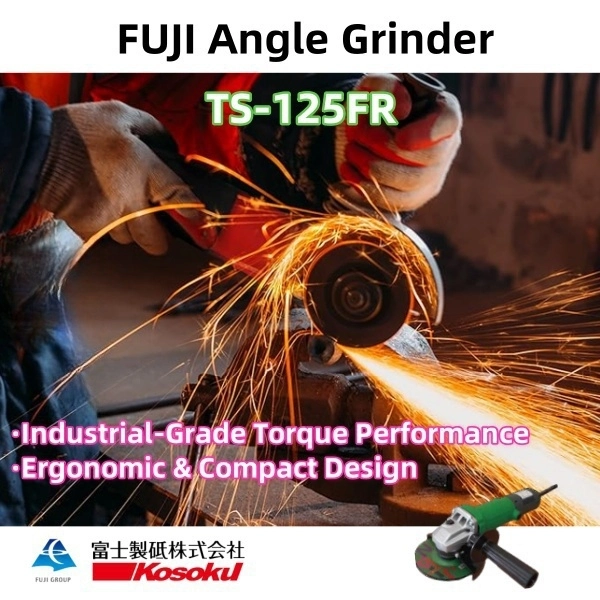
The ideal industrial angle grinder is not necessarily the largest or most powerful machine available. The workpiece, grinding position, abrasive wheel and production cycle should determine the specification.
For example, a compact 100 mm grinder can be easier to control in restricted areas, while a 125 mm or 180 mm machine may be preferred for larger workpieces and heavier material removal.
Browse FUJI Industrial Angle Grinders
Wheel diameter is one of the first specifications to consider when selecting an industrial angle grinder. The most suitable size depends on the required abrasive, workpiece dimensions, operator access and material-removal requirements.
| Grinder Class | Typical Wheel Diameter | Typical Applications | Selection Focus |
|---|---|---|---|
| 4-inch | 100 mm | General fabrication, deburring, weld finishing, cutting and restricted-access work | Compact handling and accessibility |
| 5-inch | 125 mm | General metal fabrication, surface preparation and medium-duty grinding | Balance of control and working area |
| 6-inch | 150 mm | Medium-to-heavy grinding and larger fabrication operations | Larger abrasive capacity |
| 7-inch | 180 mm | Heavy grinding, shipbuilding, structural steel and larger weld removal | Higher material-removal capability |
Always verify the permitted wheel diameter, operating speed, spindle specification and machine compatibility for the individual grinder and abrasive product before use.
Power source is an important part of industrial grinder selection. Electric, pneumatic and high-frequency systems each serve different production environments.
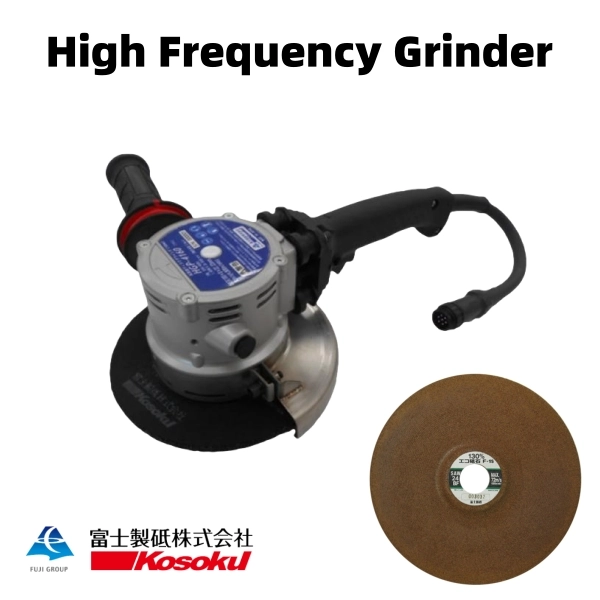
High-frequency grinding equipment is a specialized option for industrial users who need a dedicated power system and high-frequency tool configuration.
FUJI's high-frequency range includes 250 Hz, 300 Hz and 400 Hz equipment. The system is designed around the relationship between the power source, frequency converter and high-frequency grinder.
Explore FUJI High-Frequency Grinding Systems
The same grinder does not necessarily suit every industrial environment. Material type, accessibility, production workload and available utilities can change the appropriate tool configuration.
Weld grinding, edge preparation, deburring, blending and steel surface preparation.
Metal Fabrication SolutionsHeavy steel grinding, weld dressing, repair work and marine surface preparation.
Shipbuilding SolutionsCasting cleanup, stock removal and demanding finishing operations.
Foundry SolutionsStructural steel, pipe work, equipment maintenance and portable field grinding.
Construction ApplicationsPortable grinding, cutting and maintenance applications for railway equipment and infrastructure.
Railway ApplicationsGrinding, cutting, weld finishing and maintenance across automotive production and repair.
Automotive ApplicationsA practical selection process starts with the operation rather than the grinder model. Consider these factors before comparing individual machines.
Identify whether the work involves carbon steel, stainless steel, cast iron or another material. Material characteristics influence the abrasive choice and grinding process.
Select a machine that is designed for the required abrasive diameter. Common handheld industrial classes include 100 mm, 125 mm, 150 mm and 180 mm.
Confirm whether the workplace is best suited to corded electric power, compressed air or a dedicated high-frequency system.
Occasional maintenance and continuous production grinding place different demands on equipment. Consider expected operating time and workload.
Standard angle grinders are well suited to open surfaces. Die grinders and straight grinders may offer better access for internal or restricted areas.
Weight, balance, grip design and vibration can influence operator control, especially during repeated grinding work.
A grinder is only one part of the working system. Grinding wheels, cut-off wheels, flap discs and surface-preparation products are intended for different operations and materials.
FUJI develops industrial power tools together with grinding wheels and cutting products, allowing the machine and abrasive to be considered together when planning a metalworking process.
Used for material removal, weld grinding, surface preparation and related metalworking applications.
Designed for compatible cutting applications involving steel, stainless steel, pipes, profiles and structural metal.
Grinding and cutting operations involve rotating abrasive products, sparks, dust and potential kickback. Safe operation requires the machine, abrasive, guard, workpiece and operator to be considered together.
For additional guidance, visit the FUJI Technical FAQ and available technical resources.
Use the following FUJI resources to move from general selection guidance to the appropriate product, abrasive or industrial application.
An industrial angle grinder is a professional handheld tool used for grinding, cutting, weld dressing, deburring, surface preparation and material removal. Selection depends on the workpiece, abrasive, wheel size, power source and operating conditions.
Common industrial handheld classes include 4-inch, 5-inch, 6-inch and 7-inch machines. The appropriate size depends on the required abrasive, working area, access conditions and material-removal requirements.
Electric grinders use electrical power, while pneumatic grinders use compressed air. The appropriate choice depends on the utilities and operating environment available at the facility.
High-frequency equipment is intended for specialized industrial applications where a dedicated high-frequency power system and compatible grinder are appropriate. FUJI's current range includes 250 Hz, 300 Hz and 400 Hz systems.
Die grinders and straight grinders can provide improved access for detailed finishing, deburring, narrow cavities and internal surfaces that may not be convenient for a conventional angle grinder.
Confirm the abrasive type, wheel diameter, spindle specification and maximum permitted operating speed. The abrasive should also be appropriate for the material and operation.
Yes. FUJI's current portfolio includes industrial grinding equipment, grinding wheels, cut-off wheels and related surface-preparation products.
Share your material, wheel size, grinding process, power source, working environment and expected workload. FUJI KOSOKU can help identify a suitable industrial grinding tool and abrasive combination.
Contact FUJI Technical Team