Technical Guide By: John Wang, International Business Manager
Choosing a cutting disc or grinding wheel for automotive repair starts with the part and the permitted repair operation. Cutting an exhaust tube, dressing a weld on a removable steel bracket and preparing a thin body panel are different jobs. Each needs a suitable abrasive, compatible tool and clear stopping point.
This guide explains where FUJI Raicho Slim, Shirasagi, Super F2 and flap discs can fit into an automotive workshop. It focuses on material identification, access, controlled removal and finish quality. The application examples are selection guidance, not a quantified customer trial or approval to modify a vehicle structure.
Identify the vehicle, component and material before deciding where to cut or grind. Structural steel, high-strength steel, aluminum and bonded panels can require different procedures. Follow the vehicle manufacturer's instructions for sectioning, joint preparation, welding and corrosion protection. A disc supplier's application guide does not replace those instructions.
Task selection · Cutting · Grinding and finishing · Workshop examples · FAQ

| Task | Option to evaluate | Key limit |
|---|---|---|
| Cut approved steel stock or removed exhaust tubing | Raicho Slim cutting discs | Match the material and tool; support the work and maintain cut alignment |
| Cut an accessible bolt near its root | Shirasagi cut-off wheel | Confirm approved mounting and guard clearance; never improvise a flush-cut setup |
| Routine ordinary-steel weld cleanup and deburring | Super F2 grinding wheel | Retain specified weld size and base-metal thickness |
| Blend approved metal grinding marks | FUJI flap discs or a suitable flexible wheel | Select the specific material rating and finish; monitor heat and stock removal |
| Paint, filler and coating preparation | The specified sanding or surface-conditioning system | A metal grinding wheel is not a universal paint-stripping or filler-finishing tool |
For suitable steel or stainless stock, choose a cutting disc with the required diameter, thickness, bore and material rating. Check the actual tube wall or section thickness rather than selecting from the outside diameter alone. Secure the work and protect adjacent surfaces from sparks and debris.
Raicho Slim is a cutting-disc option to evaluate for workshop metal-cutting tasks. Confirm the exact product specification for the tool and material. Thin cutting discs are for the approved cutting operation; do not use their sides to deburr the newly cut edge.
Shirasagi is relevant to accessible bolt-root cutting where its intended configuration fits the job. Wheel geometry alone does not make every grinder suitable for flush cutting. Follow the product's mounting instructions and retain the required guard. If the complete guarded tool cannot reach the part, choose another method rather than removing the guard or modifying flanges.
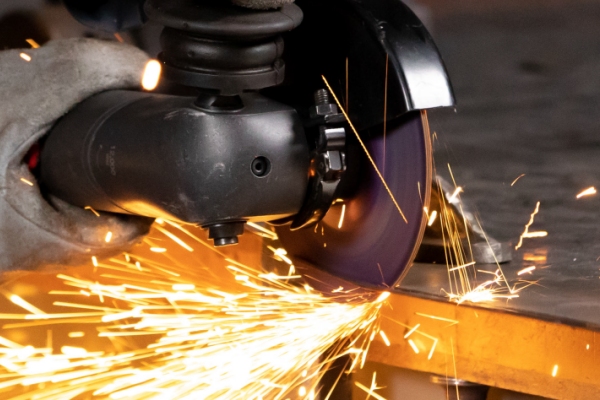
Do not describe reinforcement as protection against improper side loading. Avoid twisting or binding the disc in the cut. Work near fuel systems, electrical equipment, coatings or concealed trim requires the applicable repair procedure and workshop controls. Removing a component for bench work may be necessary to obtain safe access.
Super F2 is an aluminum oxide grinding wheel made using Japanese warm-pressing technology. Its role is economical daily grinding of ordinary steel, balancing efficiency and comfortable handling. It is not a ceramic or zirconia wheel. For a permitted weld-cleanup or deburring task, match wheel size and grade to access and the amount of material that may be removed.
On a substantial removable steel bracket, Super F2 can be evaluated for controlled local removal. That does not make it a default choice for thin outer panels, safety-critical suspension parts or high-strength vehicle structures. See the Super F2 weld grinding and deburring application guide for ordinary-steel tasks.
A suitable FUJI flap disc can blend metal grinding marks where the repair process allows. A material-compatible flexible wheel may help manage contact on a contour. Neither guarantees that a thin panel will remain cool or flat. Use controlled passes, avoid excessive pressure and inspect the remaining metal and surface frequently.
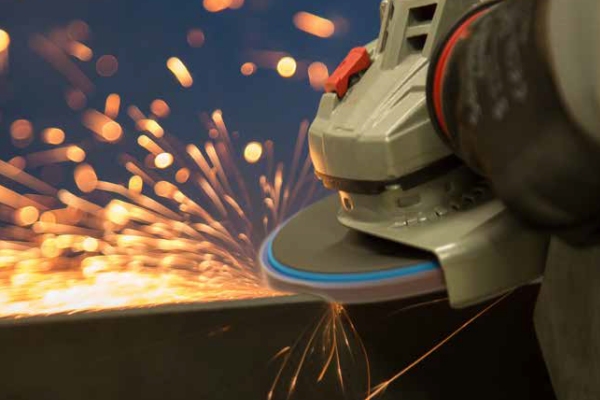
For aluminum, select an abrasive explicitly approved for the alloy and operation, with suitable loading resistance; do not assume every ORE or general-purpose flap disc qualifies. Keep aluminum work areas and abrasives appropriately separated from steel work. For stainless exhaust components, avoid abrasives previously used on carbon steel and follow the required surface-cleaning process.
Rust removal and paint preparation also need separate decisions. First determine whether corrosion has made the part unsuitable for repair. Where repair is permitted, use the required preparation process and restore corrosion protection. Grinding to bright metal alone does not establish that a panel is structurally sound or ready for paint.
Identify the tube material and wall thickness, support it on the bench and select a matching cutting disc. After cutting, change to a suitable deburring tool or abrasive. Check cut alignment, burrs and the fit required by the repair procedure before joining. Record both cutting time and edge-cleanup time when comparing discs.
Establish the permitted weld profile and retained dimensions. Evaluate Super F2 for the local steel-removal task, then a finishing abrasive if needed. Inspect the weld transition and surrounding metal before accepting the part. Do not transfer this example to structural chassis or suspension repairs without the vehicle procedure.
Follow the model-specific joint and weld-dressing instructions. Choose a tool with access and control appropriate to the joint; an angle-grinder disc may not be the specified tool for a narrow flange or spot weld. Limit removal from adjacent and underlying panels. Complete the prescribed surface preparation, sealing and corrosion-protection steps.
Manufacturing overspeed tests do not authorize operation above the speed printed on the wheel. Request product-specific compliance information where required; broad comparisons between JIS, ISO and US standards do not replace the specification of the supplied abrasive.
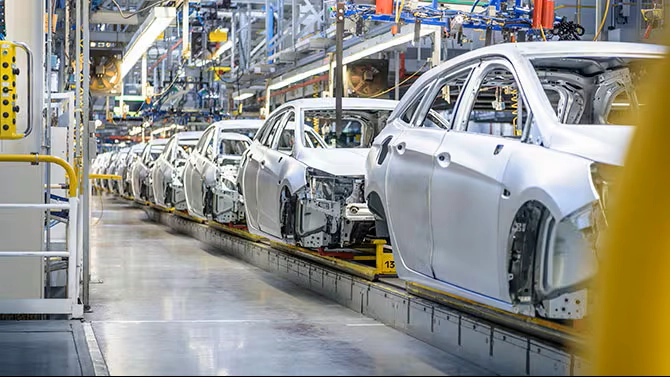
Automotive manufacturing and collision repair use different work instructions. A production-line image does not establish approval for a particular vehicle repair.
First identify the permitted repair operation and panel material. Super F2 is an option for ordinary-steel grinding where sufficient material and access exist. Thin panels and narrow joints may require a different tool or abrasive specified by the repair procedure.
A cutting-only disc must not be used for side grinding. Change to an abrasive approved for weld dressing and the particular tool, and retain the required weld and base-metal dimensions.
No abrasive guarantees this. Material thickness, contact area, pressure, dwell time and tool selection all matter. Follow the repair instructions and inspect the work as you proceed.
Only use a product explicitly approved for that aluminum application and the required operation. A general steel designation or a flap-disc shape is not enough to establish suitability.
No. FUJI can help match consumables to an application, but the vehicle manufacturer's repair information determines permitted repairs and processes.
FUJI has specialized in resin-bonded grinding and cutting wheels since 1953, with its own manufacturing operations in Japan and China. Its experience in abrasive materials, formulation and production supports selection across cutting, everyday grinding and finishing. Confirm origin, specification and any required certification for the exact product supplied.
For broader workshop fabrication, see FUJI cutting and grinding workflows for metal fabrication shops. For vehicle-specific repair information, consult the manufacturer's current repair manual; the I-CAR Repairability Technical Support portal helps technicians locate OEM information. 3M's metal-panel repair resources also illustrate why cutting, weld dressing and surface preparation are separate process stages.
Send FUJI the component material, task, tool model, disc dimensions, rated speed and required finish. A photo of the work area and current abrasive label can help identify suitable options for evaluation.
Contact FUJI for Abrasive SelectionView Cutting Wheels


