A stainless steel fabrication job is not finished when the weld is removed. The part must retain its required dimensions, avoid excessive local heating and meet the specified surface finish. On thin panels, tube assemblies and visible welds, an overly aggressive abrasive can create more finishing work than it saves.
This application guide compares FUJI Super W, JITAN, NATTOKU and ORE flap discs for different stages of stainless steel processing. It covers selecting an abrasive, controlling heat, separating stock removal from finishing and evaluating the completed component. These are practical selection examples rather than a documented customer production trial.

| Application | Starting point for selection | What to protect |
|---|---|---|
| Routine weld cleanup on stainless brackets, frames and plate | Super W for economical stainless grinding; select the approved size and grade. | Required weld profile, base-metal thickness and nearby finished surfaces. |
| Thin stainless sheet and light local grinding | JITAN in a suitable compact size and thickness; evaluate the 3 mm option on a representative sample. | Flatness, edge thickness and heat input. A thin wheel does not guarantee a damage-free result. |
| Repeated stainless grinding where productivity and handling matter | Compare JITAN with a suitable NATTOKU specification on the actual job. | Accepted output, wheel consumption and operator control rather than purchase price alone. |
| Blending visible weld transitions on tube or sheet | ORE flap discs with a suitable grit sequence. | Scratch direction, uniform appearance and remaining material. |
| Cutting stock before welding | Super Tsurugi cutting discs where the material and machine specifications match. | Cut alignment and burrs; cutting-only discs must not be used for side grinding. |
Confirm the exact alloy, such as 304 or 316, together with section thickness and the finish requirement. Do not assume a recommendation for one stainless grade automatically covers duplex stainless, titanium or every high-alloy material.
Super W uses selected white aluminium oxide abrasive with phenolic resin, not zirconia as previously described on this page. FUJI produces it in its wholly owned Japanese-operated factory in China using Japanese production requirements and a warm-press process. It should not be described as a Japanese-made product.
Its formulation and pore distribution are designed to support effective stainless grinding and heat management. For general weld cleanup, deburring and edge preparation, select the wheel for the amount of stock to remove and the available machine. Keep the wheel moving and inspect the work frequently; no abrasive can promise zero discoloration or distortion regardless of technique.
Compact 4-inch-class tools suit accessible local work and smaller parts; a compatible 7-inch tool can cover larger areas where access and control permit. Actual millimetre diameter, bore, thickness and maximum speed must match the grinder. For available specifications, see the Super W product page.

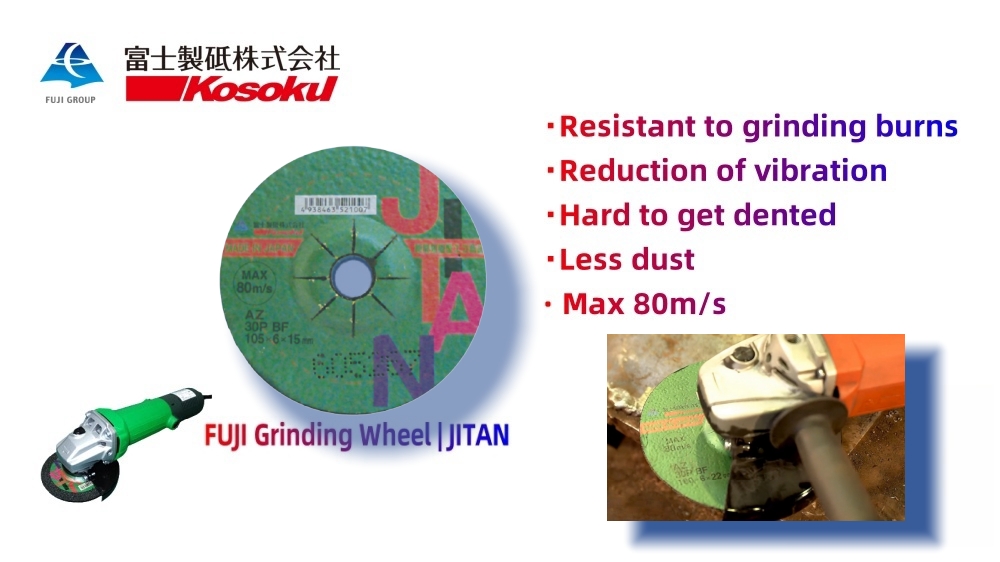
JITAN is FUJI’s premium Japanese-made grinding wheel, developed around selected zirconia-alumina abrasive, phenolic resin and a layered construction. Its name refers to time saving. P is the wheel grade, describing grain retention by the bond; it is not a grade of zirconia mineral.
The compact 105 mm and 125 mm options are relevant to accessible welds, small components and sheet-metal work. FUJI recommends evaluating the 3 mm option for thin stainless sheet and the 6 mm option for more general grinding where wear resistance matters. Confirm available diameter/thickness combinations and machine compatibility before ordering.
The wheel is designed for responsive grinding and comfortable handling. Actual heat, vibration and removal rate depend on the complete setup and operating load. Begin with a sample part and check for distortion, gouging and the amount of later finishing needed.
NATTOKU provides another FUJI option to assess against the workload and budget. Confirm the product’s material approval, wheel size, grade and available thickness. Compare it with Super W or JITAN on the same material and acceptance criteria rather than assuming identical performance.
Manufacturing process alone does not establish that one wheel is universally safer, cooler or more productive than another. A useful comparison combines the documented wheel specification with repeatable results on the intended workpiece.
Check the drawing, required weld size and remaining wall thickness. Not every weld should be ground flush. On a thin enclosure, railing tube or decorative panel, identify the surrounding finished areas and establish an acceptable sample before processing the full batch.
Use clean abrasives reserved for stainless steel. Keep carbon-steel grinding dust, used carbon-steel abrasives and contaminated handling tools away from the work. Check benches and fixtures as well as the wheel. An abrasive label alone cannot prevent contamination from the rest of the workshop.
Choose an approved grinding wheel capable of the required removal without unnecessary aggressive scratching. Follow its specified working angle, use controlled pressure and keep the contact moving. Inspect the profile between passes and stop before cutting below the intended surface. If the wheel rubs rather than cuts, review its condition, suitability and the machine instead of simply pressing harder.
FUJI ORE flap discs can be used for appropriate grinding and blending tasks. Select the starting grit according to the scratches left by the previous operation. Progress through suitable finer steps, removing the previous scratch pattern before moving on. A fixed 40-to-120 grit jump does not guarantee a specified satin finish.

For a visible finish, compare scratch direction and consistency under suitable lighting. Where a roughness value is specified, verify it with the required measurement method. A grit number is not a guaranteed Ra value, and a flap-disc finish is not automatically a mirror polish or a food-contact qualification.
Heat tint, embedded contamination and the required post-fabrication treatment need separate assessment. Mechanical blending is not the same as passivation. Follow the project’s cleaning and corrosion-resistance requirements; specialist treatment may be needed after welding or grinding. Further guidance is available in Practical Guidelines for Austenitic Stainless Steel Fabrication.
| Problem | What to investigate | Next action |
|---|---|---|
| Blue or brown discoloration during grinding | Local dwell time, excessive pressure, rubbing, wheel suitability and thin-section heat sensitivity. | Stop and reassess the process. Test controlled passes on a sample and check whether the part needs further surface treatment. |
| Panel distortion or edge thinning | Insufficient support, prolonged contact or excessive material removal. | Review fixturing and removal allowance; reduce local heat accumulation and inspect flatness frequently. |
| Deep scratches after blending | Too aggressive an initial abrasive, incomplete removal of the previous scratch pattern, or trapped contamination. | Use a suitable intermediate step and inspect before progressing to a finer abrasive. |
| Rust spots after fabrication | Transferred iron, workshop dust, handling contamination, surface damage or unsuitable service conditions. | Investigate the source and apply the specified cleanup procedure; do not diagnose every rust spot from appearance alone. |
Super Tsurugi 105 × 1 × 16 mm is a compact flat cutting-disc option for suitable steel and stainless applications. Confirm the actual alloy and machine requirements. Do not assume an unverified iron-free composition or titanium approval.
80 m/s is a maximum peripheral-speed rating, not a universal operating-speed recommendation. Follow the wheel’s marked maximum RPM and the machine instructions. The wheel’s RPM rating must be at least the machine’s rated maximum speed. After cutting, change to the appropriate abrasive and guard for deburring or grinding.
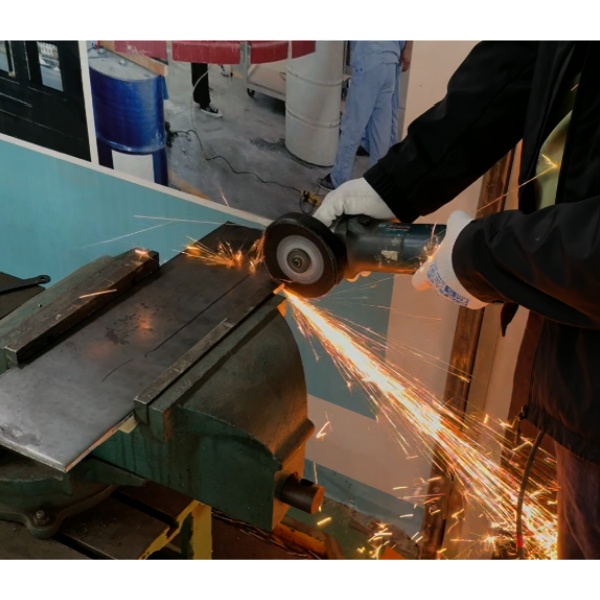
When selecting FUJI angle grinders or another compatible machine, check permitted wheel diameter, bore, type, guard, flanges and speed. Brand matching alone does not ensure correct mounting or the best operating conditions. Stop if vibration or operation becomes abnormal and inspect the setup.
For a useful comparison, hold the workpiece and acceptance criteria constant. Record grinding time, abrasive consumption, blending time, rejects and the finished dimensions. Compare cost per accepted component, including rework, rather than only grams removed or wheel price. Consult the FUJI B2B wheel-buying guide for broader purchasing considerations.
Super W is an economical dedicated stainless option. Consider JITAN when evaluating a premium grinding approach, particularly compact or thin-sheet tasks. Select the actual specification from the weld size, section thickness, machine and desired finish.
No. Wheel selection helps, but pressure, dwell time, support and the amount removed also matter. Test on representative material and check both appearance and distortion before production.
No. It may provide the required blended finish, but a decorative mirror finish or a specified hygienic surface can require additional abrasives, polishing and verification.
No wheel can guarantee this. Use suitable maintained equipment, manage exposure time, control dust and follow the workplace risk assessment and protective measures. Comfortable handling does not by itself establish safe exposure.
No. Manufacturing origin varies by product. JITAN is made in Japan; Super W is produced in FUJI’s wholly owned Japanese-operated factory in China. Check the individual product and supplied documentation.
FUJI has manufactured abrasives since 1953. Share the stainless grade, wall thickness, weld dimensions, required surface finish, grinder details and current problem so FUJI can recommend specifications for evaluation.
Explore FUJI Grinding & Finishing Abrasives


