During customer visits to several European foundries in March 2026, FUJI demonstrated its HGC-3902 7-inch (180mm), 300Hz high-frequency angle grinder with matched grinding wheels for grey cast iron. The focus was light-to-medium grinding of small and medium-sized castings, including automotive components, casting flash removal and surface treatment.
Customers responded positively to the handling and grinding performance of the 7-inch tool in these applications. Their feedback is now informing improvements to the handle and switch before the next stage of European market introduction. This report describes demonstrations and development feedback, rather than a completed production-line replacement or a quantified long-term performance study.
 Figure 1: Automotive casting grinding requires controlled removal around parting lines and changes in component geometry.
During the visits, customers discussed the need for suitable replacement equipment following the discontinuation of FEIN high-frequency tools. FUJI is developing a stable, economical alternative for foundries that want to retain their existing 300Hz high-frequency infrastructure while matching the tool more closely to the casting and task.
The immediate focus is the 7-inch HGC-3902 for light-to-medium fettling and surface grinding of small and medium-sized components. Selecting the largest available grinder is not always the best choice: operators also need manageable handling, access to the working face and control near features that must retain their shape.
For broader system selection, see FUJI high-frequency grinders and foundry abrasive solutions. A replacement assessment should consider the grinder, power supply, abrasive and maintenance support together.
Fettling removes unwanted material remaining after casting. On automotive castings, the practical challenge is to clear excess material without grinding into required profiles, machined interfaces or dimensional allowances. Different areas on the same component may need different tools.
| Working area | Grinding objective | Selection considerations |
|---|---|---|
| Accessible parting lines and casting flash | Remove excess material and blend the surrounding surface | HGC-3902 with a matched 180mm foundry wheel; control pressure and contact area |
| Outer casting surfaces | Local smoothing and surface preparation | Choose grit and formulation for the required finish and removal allowance |
| Residual gate or riser stubs | Blend remaining stock where within the tool's capacity | Assess stub size and stock volume; large sections may require a separate cutting or heavier grinding process |
| Narrow openings and internal cavities | Reach areas inaccessible to a 180mm disc | HIC-3802 straight grinder with an approved mounted abrasive and matching collet |
The HGC-3902 combines a 7-inch wheel format with 2600W rated power and a 300Hz supply specification. Its high-frequency AC asynchronous squirrel-cage motor has no carbon brushes or commutator. Stable speed under appropriate working loads helps the abrasive continue cutting effectively as contact conditions change.
Speed retention depends on load and the matched supply; it should not be interpreted as zero speed loss under any overload. Apply controlled grinding pressure rather than leaning body weight onto the tool. Tool handling and removal performance must be evaluated on the actual casting.
Feedback from the European demonstrations was positive for light-to-medium grinding and surface treatment of small and medium-sized castings. FUJI is using that feedback to refine the handle and switch. Reduced handling effort is a useful selection consideration, but it is not a substitute for assessment of vibration exposure, working posture and task duration.
 Figure 2: HGC-3902 foundry application. Operator feedback is informing handle and switch improvements.
A productive foundry grinding setup depends on the wheel as well as the motor. FUJI discussed two abrasive options during the customer visits: a foundry-specific zirconia alumina wheel and an improved Super F2 wheel for economical routine work. The final thickness, grit, grade and speed rating should be selected for the actual casting and grinder.
Selected zirconia alumina abrasives provide an option where effective stock removal is the priority. The formulation should suit the casting surface, contact area and available working pressure. A premium wheel should be compared on time per accepted component and wheel consumption, not purchase price alone.
The improved foundry formulation offers an economical approach to routine casting cleanup and surface grinding. The 180mm Super F2 range provides product-family background; confirm the application-specific version rather than assuming every standard Super F2 specification is identical to the demonstrated wheel.
Grit size describes abrasive coarseness; the grade letter describes how firmly the bond holds the grains, not the hardness of the abrasive mineral. Select both for the task. Inspect the wheel label and condition, and ensure its marked maximum RPM is at least equal to the grinder's specified maximum speed. Diameter, bore, flanges and guard must also be compatible.
A 180mm angle-grinding disc cannot safely access every casting cavity. For narrow openings and recessed areas, FUJI recommends assessing the HIC-3802 high-frequency straight grinder with a suitable mounted abrasive.
The 6mm and 8mm dimensions refer to collet and tool-shank size, not abrasive head diameter. Match the shank exactly to the collet and follow the mounted-tool manufacturer's limits for speed, head size and permitted overhang. Confirm clearance and clamping before operating inside a cavity.
The HGC-3902 is intended for integration with compatible European 300Hz high-frequency power systems. Where the tool and supply specifications match, an existing system can be retained rather than replaced solely to introduce the grinder.
Before connection, verify supply voltage, frequency, available current and capacity, connectors, protective arrangements and the number of tools operating simultaneously. A 300Hz label alone does not establish complete compatibility. A 250Hz tool must not be treated as a direct substitute, and a 300Hz grinder must not be connected directly to ordinary 50/60Hz mains.
The March visits provided useful operator feedback and identified relevant applications. To establish production benefits at an individual foundry, compare the proposed system against the current process on comparable grey iron castings and the same acceptance requirements.
The customer feedback reported here is qualitative. No universal percentage improvement or guaranteed cycle-time reduction is claimed for all castings.
Development update: FUJI is upgrading the HGC-3902 handle and switch in response to feedback from European foundry customers. The updated model will undergo the applicable CE conformity assessment work, with completion targeted for early 2027. Formal market promotion is planned following completion of the relevant conformity requirements. This target does not mean that the current development model is already CE certified.
FUJI is also developing a 9-inch (230mm) high-frequency angle grinder for heavier stock removal and larger castings. A prototype is targeted for mid-2027; this is a prototype milestone, not an announced production-release date.
FUJI has confirmed its participation in GIFA 2027 in Düsseldorf, Germany, in June 2027. The exhibition will provide an opportunity to meet foundry customers, discuss casting-cleaning requirements and present FUJI's high-frequency grinding solutions.
Customers are welcome to discuss 180mm grinder-and-wheel combinations, existing 300Hz power systems and future heavy-duty requirements. Any demonstration of the new 9-inch prototype will depend on development progress.
The current application focus is light-to-medium grinding and surface treatment of small and medium-sized grey iron castings, including accessible parting lines, flash and local residual stock. Larger stock volumes and restricted access require separate tool assessment.
This report covers customer visits, demonstrations and feedback. FUJI is developing an alternative for customers seeking replacement high-frequency equipment; it does not claim that all visited foundries have completed a fleet replacement.
Consider the foundry-specific 180mm zirconia alumina option where stock-removal performance is the priority, or the improved Super F2 option for economical routine fettling. Compare both on the actual casting and required finish.
It can connect to a compatible system once voltage, capacity, connectors and protection requirements have been verified. Send the supply and tool nameplate details to FUJI before confirming the configuration.
Handle and switch improvements are in progress. FUJI targets completion of the relevant CE conformity work in early 2027, followed by formal market promotion. The 9-inch model has a separate prototype target of mid-2027.
Contact FUJI with the casting material, task, existing equipment, supply details and expected working duty. Demonstration arrangements, warranty terms, maintenance requirements and spare-parts support should be confirmed for the proposed model and location.
FUJI combines abrasive manufacturing experience dating to 1953 with its industrial grinding equipment range. For foundries, the practical value is coordinated selection of the power tool and consumable, supported by application feedback. When assessing the best grinding wheel supplier for a casting process, compare technical support and cost per accepted part alongside the wheel price.
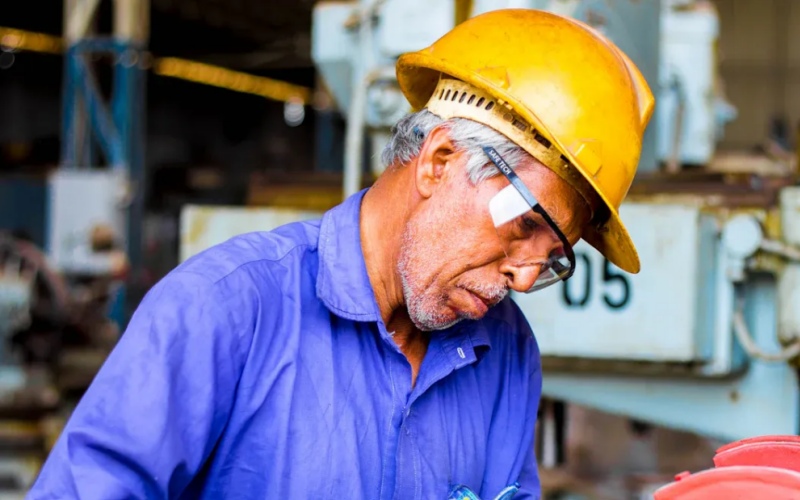 Figure 3: FUJI abrasive manufacturing experience supports matched tool-and-wheel selection.
Send your casting material, work-area photos, stock-removal requirements and 300Hz supply details. FUJI can discuss a suitable HGC-3902 and 180mm abrasive combination, or HIC-3802 access for internal areas.
Contact FUJI about a demonstration or GIFA 2027 meeting
Explore high-frequency grinders and power systems | Explore industrial grinding wheels


