


At Fuji Grinding Wheel, our engineering team understands that industrial metal fabrication demands more than just a standard abrasive. We developed the FUJI Resinox Bonded Grinding Wheel specifically for professionals tackling heavy-duty weld cleaning, chamfering, and spatter removal. By combining an advanced abrasive grain distribution with our proprietary resin formulation, we've created an angle grinder disc that drastically minimizes thermal damage while maximizing material removal rates.
Available in 4", 5", 6", and 7" diameters, this series utilizes AWA premium abrasives bonded through our exclusive Japanese hot-pressing technology. Whether you are working in an automotive assembly plant or a marine engineering shipyard, this wheel is designed to handle demanding surface preparations securely and efficiently.

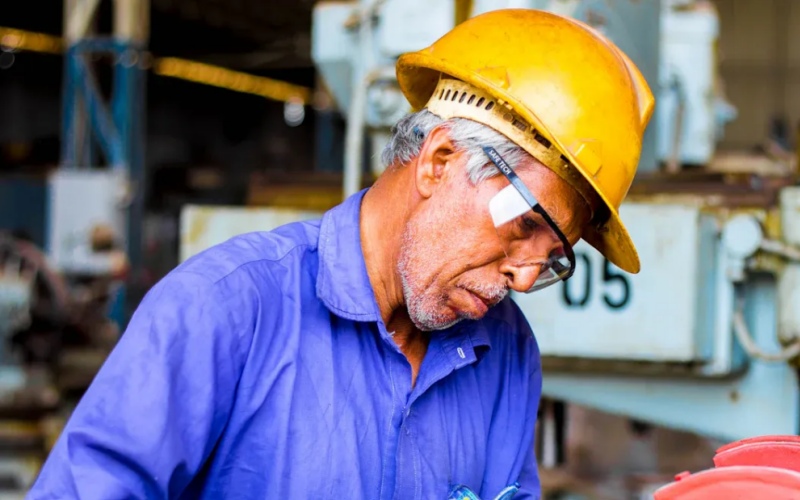
We don't just rely on lab data. Last month, our technical team conducted a site test at a commercial shipyard facility focusing on marine vessel fabrication. We pitted the 7" (180mm) Fuji Resinox Wheel against a leading European competitor on a heavy SS304 stainless steel weld seam.
Through decades of working with foundries and heavy machinery manufacturers, we identified core challenges and designed the Resinox wheel to solve them directly:
| Industry Challenge | The Fuji Engineering Solution | Measurable Impact |
|---|---|---|
| Thermal Damage & Warping | Optimized resin + AWA abrasive heat dissipation matrix | Reduces operating temp by 40%; eliminates stainless discoloration |
| Low Material Removal Rate | Japanese hot-pressing + continuous self-sharpening grains | 30% faster stock removal; consistent bite edge |
| Operator Fatigue & Vibration | Computer-balanced structure + vibration-dampening core | 50% less vibration; safer for extended 8+ hour shifts |
| Frequent Disc Replacements | High-density grain distribution + robust resin bond | 80% utilization; cuts consumable replacement frequency by 40% |

Safety is non-negotiable in industrial grinding. To ensure optimal performance and protect your team, always adhere to the following protocols (compliant with international safety standards) when mounting our abrasive tools:
Our proprietary resin acts dynamically; as the AWA grains cut, the resin breaks down at a highly controlled rate. This constantly exposes fresh, sharp grains rather than letting dull grains rub and generate friction-induced heat. This is crucial for avoiding "blue burn" on sensitive metals.
Yes. While primarily designed for carbon and stainless steel, the friability of the AWA premium abrasives prevents the excessive "loading" or clogging typically experienced when grinding softer metals like aluminum or brass.
Conventional cold-pressing can leave microscopic air pockets. Our thermal heat-pressing process cures the resin and abrasives under extreme pressure, creating an incredibly dense, uniform matrix. This translates to a safer wheel that won't prematurely shatter under heavy lateral loads.
Absolutely. They are highly recommended for use with our high-frequency grinder series, as they can safely handle the sustained torque and RPMs these industrial tools generate.
Deploying the FUJI Resinox grinding wheel on your production line means leveraging 70 years of dedicated Japanese abrasive manufacturing experience. Our primary objective is to optimize your facility's Total Cost of Ownership (TCO) by reducing downtime and elevating your surface finish quality.
Ready to run a side-by-side trial in your facility? Explore our full specifications in the Product Categories or Contact our international sales team today for volume pricing and technical consultation.
Choosing the correct abrasive wheel is critical for both operational efficiency and JIS-compliant safety. Fuji Grinding Wheels are engineered with precise technical markings to ensure the perfect match for your specific material and machine requirements.
For professional export markets, always verify the Peripheral Speed (m/s) compatibility. Fuji wheels are designed to exceed JIS Burst Speed factors, but operating at the recommended R.P.M. ensures the longest tool life and cleanest cut.
Note: Mismatched grit or hardness can lead to excessive heat buildup, affecting the workpiece's structural integrity.

Global Maintenance Standard: To maintain the high safety factor of Fuji wheels, avoid exposure to excessive humidity and chemical solvents during storage. Proper care preserves the resinoid bond's strength, crucial for high-load industrial applications.
Fuji products are manufactured following strict Japanese standard process requirements. Every wheel is engineered to meet or exceed JIS (Japanese Industrial Standards), such as JIS R 6242 and B 4051. Our core engineering logic prioritizes maximum operator protection by maintaining safety factors and burst speed capabilities that often surpass the highest industry benchmarks.
| Standard Region | Safety Factor (Burst Multiplier) | Safety Logic & Benchmark |
|---|---|---|
| FUJI (High Precision) | > 2.0x | Engineered to exceed JIS requirements for maximum reliability. |
| Japan (JIS R 6242) | 2.0x | Extreme Safety: A wheel rated at 80m/s must withstand a 160m/s burst test. |
| Europe (EN 12413) | 1.73x | Risk Balanced: Provides high safety redundancy for most industrial apps. |
| USA (ANSI B7.1) | 1.5x | Efficiency Focused: Relies on machine guarding and operational procedures. |
Abrasive Selection Guide

Selection of grains (A, WA, AZ, etc.) based on material hardness and grinding precision.
Warning Symbol Interpretation

Standardized safety icons for safe operation and protection guard usage.
When deploying Fuji high-performance tools in overseas markets, ensure that the regional power grid frequency and voltage match the tool specifications. To maintain the superior burst speed safety of Fuji wheels, store abrasives in a dry, temperate environment. Humidity can degrade the resin bond, potentially lowering the wheel’s resistance to centrifugal forces.


