


FS-B30E wet precision abrasive cut-off machine for test-piece cutting, research, inspection and production quality control.
Confirm material, clamping and site power requirements before ordering.


The FUJI KOSOKU FS-B30E is an enclosed wet precision abrasive cut-off machine in the F Cutter Series (Fカッターシリーズ・精密砥石切断機). It is designed for cutting test pieces and workpieces whose cut surfaces require inspection, with applications in research, testing, quality control and production.
Its useful features are a sliding vise table, two cutting movements, coolant delivery and magnetic separation of ferrous particles. For metallographic sample preparation, match the abrasive wheel and cutting conditions to the material and the examination method. Cutting quality must be validated on the actual sample rather than assumed from the machine alone.

The following standard specifications are taken from the FUJI Japan catalog. Confirm the configuration supplied in your quotation, particularly electrical supply and wheel mounting.
| Model | FS-B30E, F Cutter Series |
|---|---|
| Process | Wet precision abrasive cutting |
| Wheel dimensions | 255 × 1.0–1.5 × 25.4 (31.75) mm; confirm bore and mounting specification for the supplied machine |
| Standard supplied wheel | F-Cut PWA100N, 255 × 1.2 × 31.75 mm, 3 pieces |
| Main shaft motor | 2.2 kW, totally enclosed, three-phase 200 V |
| Main shaft speed | 2,500 min⁻¹ at 50 Hz; 3,000 min⁻¹ at 60 Hz |
| Maximum cutting capacity | Ø75 mm; suitability depends on workpiece shape, material and clamping |
| Vise table travel | X: 140 mm; Y: 180 mm |
| Maximum vise opening | 80 mm |
| Coolant pump | 60 W |
| Magnetic separator | 25 W, AC 200 V |
| Machine dimensions (W × D × H) | 1,200 × 1,372 × 1,600 mm |
| Machine weight | 700 kg |
View the official FUJI cutting-machine catalog, pages 59–60.

The FS-B30E supports cutting with the grinding wheel fixed while the vise base slides horizontally, and cutting by raising and lowering the grinding wheel. The vise base uses slide bearings for smooth movement and wear resistance. Select the movement and fixture arrangement according to the workpiece and the operation manual.
The 80 mm vise opening is a clamping dimension, not the maximum cutting diameter. The catalog cutting capacity is Ø75 mm. Irregular parts, tubes and assemblies need an individual clamping review; send a drawing or photograph before ordering.
The standard catalog configuration includes a 60 W coolant pump and a 25 W magnetic separator. Coolant supports heat control at the cut, while the magnetic separator removes ferrous particles. It does not replace routine coolant-system cleaning or remove every type of contaminant.
For a repeatable process, check coolant delivery, fluid condition, workpiece restraint and wheel condition according to the operating instructions. An enclosed hood helps contain the cutting zone, but approved guarding, operating procedures and appropriate protective equipment remain necessary.
The standard accessory is F-Cut PWA100N 255 × 1.2 × 31.75 mm. The catalog wheel-size range is 255 × 1.0–1.5 mm with the specified bore options. Confirm the exact bore, flange arrangement, wheel speed rating and wet-use suitability for your machine before installation.
FUJI offers precision wheel grades for different steels and alloys. Send the material grade, hardness and required section quality so that the wheel can be selected for the task. Do not substitute Super Raicho hand-held angle-grinder discs or choose a wheel solely because its thickness is similar.
See the FUJI cut-off wheel range for broader consumable categories; request the F-Cut specification specifically for this machine.
Before accepting a process, evaluate cut location, dimensional allowance, burrs, visible heat effects and the condition required for the next inspection stage. Record the wheel grade, material, feed conditions and coolant setup so that trial results can be reproduced. No universal cutting-time, wheel-life or burn-free guarantee is implied.

Plan access and installation for the 700 kg machine and its catalog footprint of 1,200 × 1,372 × 1,600 mm, plus the working and maintenance clearance specified in the installation instructions. The standard motor supply is three-phase 200 V; confirm site voltage and frequency with FUJI before arranging the electrical connection.
The catalog lists a waterproof cover, three F-Cut wheels, a spanner, cutting fluid (three 1-litre containers) and grease. A power cord is not included. Confirm the final accessory list, delivery arrangements, commissioning support and warranty terms in the written quotation.

The FS-B30E is a wet precision abrasive cut-off machine for test-piece cutting, research, inspection, quality control and production tasks that require a controlled cut surface. Confirm the workpiece and acceptance criteria before selecting a wheel.
The official catalog lists three F-Cut PWA100N wheels, 255 × 1.2 × 31.75 mm. Use the approved precision wheel specification for the machine and material; hand-held angle-grinder discs are not interchangeable.
Yes. The catalog specifies wet use, a 60 W coolant pump and a 25 W magnetic separator. Use the approved cutting fluid and follow the machine manual for coolant preparation and maintenance.
The catalog standard is three-phase 200 V, with shaft speeds specified for 50 and 60 Hz. Do not connect it directly to a different supply. Ask FUJI to confirm an appropriate electrical configuration before ordering.
No universal guarantee can be made. Wheel selection, coolant delivery, feed and clamping affect the cut. Validate representative samples against your inspection requirements and allow for subsequent sample preparation.
For a different capacity or workpiece arrangement, compare the F Cutter Series wet precision machines and the FUJI metal cut-off machine range. Select by material, cross-section, fixture requirements and cut-surface acceptance rather than motor power alone.
Send your material grade and hardness, maximum workpiece dimensions, sample drawing, daily cutting quantity, required cut quality, site voltage/frequency and destination country. FUJI can review the machine configuration and F-Cut wheel specification for your application.
Contact FUJI About FS-B30EFuji products are manufactured following strict Japanese standard process requirements. Every wheel is engineered to meet or exceed JIS (Japanese Industrial Standards), such as JIS R 6242 and B 4051. Our core engineering logic prioritizes maximum operator protection by maintaining safety factors and burst speed capabilities that often surpass the highest industry benchmarks.
| Standard Region | Safety Factor (Burst Multiplier) | Safety Logic & Benchmark |
|---|---|---|
| FUJI (High Precision) | > 2.0x | Engineered to exceed JIS requirements for maximum reliability. |
| Japan (JIS R 6242) | 2.0x | Extreme Safety: A wheel rated at 80m/s must withstand a 160m/s burst test. |
| Europe (EN 12413) | 1.73x | Risk Balanced: Provides high safety redundancy for most industrial apps. |
| USA (ANSI B7.1) | 1.5x | Efficiency Focused: Relies on machine guarding and operational procedures. |
Abrasive Selection Guide
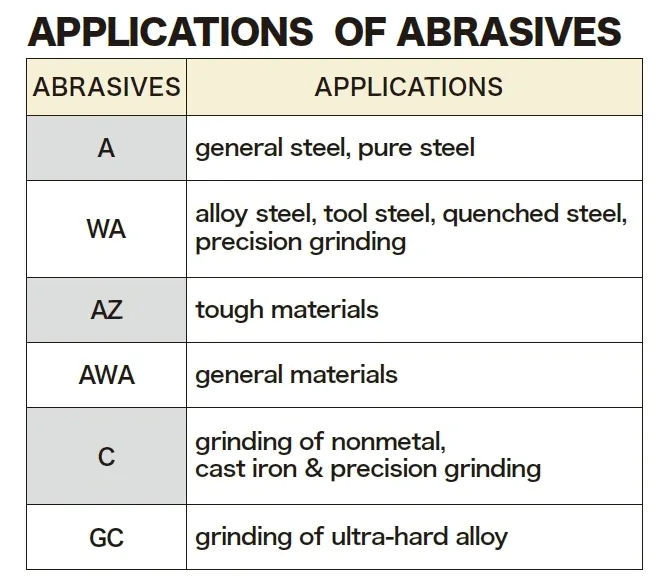
Selection of grains (A, WA, AZ, etc.) based on material hardness and grinding precision.
Warning Symbol Interpretation
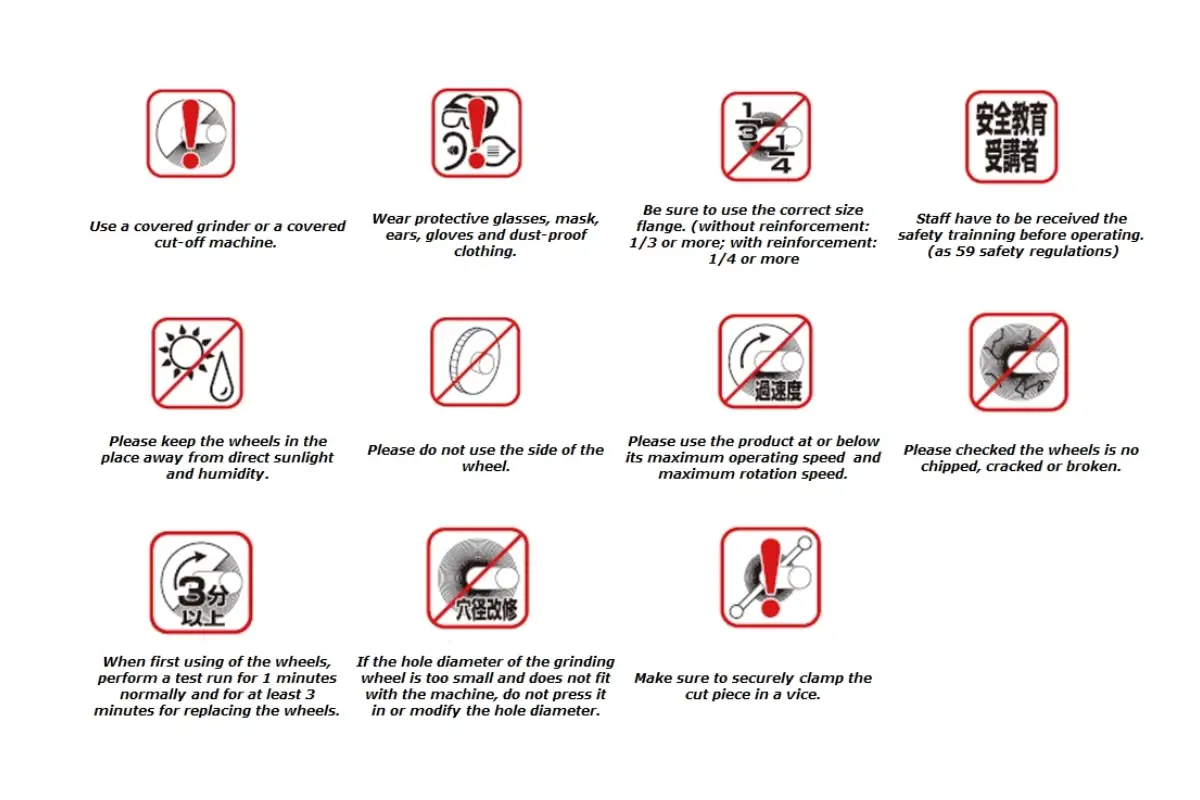
Standardized safety icons for safe operation and protection guard usage.
When deploying Fuji high-performance tools in overseas markets, ensure that the regional power grid frequency and voltage match the tool specifications. To maintain the superior burst speed safety of Fuji wheels, store abrasives in a dry, temperate environment. Humidity can degrade the resin bond, potentially lowering the wheel’s resistance to centrifugal forces.
Fuji products are manufactured following strict Japanese standard process requirements. Every wheel is engineered to meet or exceed JIS (Japanese Industrial Standards), such as JIS R 6242 and B 4051. Our core engineering logic prioritizes maximum operator protection by maintaining safety factors and burst speed capabilities that often surpass the highest industry benchmarks.
| Standard Region | Safety Factor (Burst Multiplier) | Safety Logic & Benchmark |
|---|---|---|
| FUJI (High Precision) | > 2.0x | Engineered to exceed JIS requirements for maximum reliability. |
| Japan (JIS R 6242) | 2.0x | Extreme Safety: A wheel rated at 80m/s must withstand a 160m/s burst test. |
| Europe (EN 12413) | 1.73x | Risk Balanced: Provides high safety redundancy for most industrial apps. |
| USA (ANSI B7.1) | 1.5x | Efficiency Focused: Relies on machine guarding and operational procedures. |
Abrasive Selection Guide
Selection of grains (A, WA, AZ, etc.) based on material hardness and grinding precision.
Warning Symbol Interpretation
Standardized safety icons for safe operation and protection guard usage.
When deploying Fuji high-performance tools in overseas markets, ensure that the regional power grid frequency and voltage match the tool specifications. To maintain the superior burst speed safety of Fuji wheels, store abrasives in a dry, temperate environment. Humidity can degrade the resin bond, potentially lowering the wheel’s resistance to centrifugal forces.


