


When our engineering team at FUJI visited top-tier industrial foundries across the globe, we witnessed a recurring bottleneck: traditional brown aluminum oxide discs were failing under the extreme mechanical stress of heavy-duty casting cleaning. Operators were battling rapid wheel wear, premature glazing, and exhausting vibration. To solve these critical pain points, our team developed the FUJI 180mm x 6mm Zirconia Grinding Wheel—a tool custom-engineered specifically for the brutal environments of cast iron and cast steel snagging.

We manufacture this premium abrasive disc using our proprietary Japanese hot-pressing production technology. We don't cut corners on materials. The core formulation features premium zirconia alumina grains that undergo a rigorous acid-washing treatment. This crucial step removes microscopic impurities and optimizes the surface morphology of the grit. We bond these treated grains using top-tier phenolic resins sourced directly from Japan's Sumitomo, reinforced with heavy-duty, alkali-free fiberglass mesh layers. The result? Exceptionally high structural bonding strength, uniform micro-porosity, and superior anti-cracking resilience that our clients trust.
To ensure our clients get the most out of our abrasives, we always emphasize the importance of matching the wheel to the right equipment. The FUJI 180mm Zirconia wheel is engineered for aggressive metal removal and optimal rotational stability.

| Technical Parameter | FUJI Specification |
|---|---|
| Dimensions (O.D. x T x Hole) | 180mm x 6mm x 22.23mm (7" x 1/4" x 7/8") |
| Abrasive Matrix | Premium Acid-Washed Zirconia Alumina (ZA) |
| Bonding System | Sumitomo Phenolic Resin (Made in Japan) |
| Reinforcement Core | Multi-Layer Alkali-Free Fiberglass Mesh |
| Maximum Operating Speed | 80m/s (15,500 RPM) |
| Recommended Power Tool | FUJI Kosoku 300Hz HGC-3902 |
Through rigorous internal testing and real-world feedback from metal fabrication shops, our Zirconia series consistently demonstrates overwhelming operational superiority over standard international brands.
We are proud to report that this wheel delivers a grinding ratio exceeding 20. For every gram of abrasive our wheel sheds, it removes more than 20 grams of cast iron. The zirconia crystalline structure micro-fractures under pressure rather than tearing out of the resin bond. This self-sharpening trait continuously exposes razor-sharp cutting edges, yielding a metal removal rate that is reliably 3x faster than traditional brown alumina products.
Safety is built into our DNA. Our hot-press technology creates a denser disc structure. Combined with the alkali-free fiberglass mesh, the wheel boasts immense tensile strength. It resists catastrophic disc failure even when operators strike heavy casting gates, jagged risers, or uneven parting lines, extending service life by up to 300%.
Inferior wheels often suffer from "metal loading"—where molten chips adhere to the abrasive, causing the wheel to glaze and burn the workpiece. Our customized uniform porosity formulation facilitates rapid debris evacuation. The grinder glides smoothly through heavy metal sections without bouncing, significantly reducing hand-arm vibration (HAV) and preventing localized thermal annealing on your valuable castings.
We designed this heavy-duty wheel to solve the most stubborn surface conditioning and stock removal challenges in modern metallurgy.

In foundries casting gray iron and nodular (ductile) iron, post-processing is a massive bottleneck. When parts emerge from the molds, they are armored in hardened sand, oxidized scale, and robust gating systems. Removing these requires immense force. Our zirconia wheel’s inherent shock resistance ensures stable cutting action against these irregular geometries without edge chipping.
Furthermore, in cast steel foundries requiring weld blending and precision roughing, our wheel cuts cleanly without bouncing. This leaves a uniform, flat surface profile, eliminating the need for costly secondary blending steps and allowing components to move straight to final machining.
A: Cast iron features a highly abrasive, tough outer skin. Standard brown alumina dulls quickly, generating excess heat. Zirconia alumina’s micro-crystalline structure fractures under pressure, exposing fresh, sharp edges. This provides a cooler, faster cut and a lifespan that outpaces standard wheels by 300%.
A: Raw abrasive grains have microscopic dust that prevents resin from sticking properly. Our meticulous acid-washing process creates an ultra-clean, textured surface. This allows the Japanese Sumitomo resin to anchor deeply into each grain, preventing premature grit shedding during heavy snagging.
A: In heavy-duty foundry work, lateral stress on the wheel is immense. Alkali-free fiberglass maintains its tensile strength even under high grinding temperatures, acting as a structural skeleton that prevents the disc from shattering upon impact with jagged gates.
A: Phenolic resin bonds can degrade if exposed to extreme humidity or temperature fluctuations. We strongly advise storing the wheels in a dry, well-ventilated room, ideally at constant room temperature, keeping them in their original packaging until deployment to maintain peak safety and performance.
A: Yes. The 22.23mm (7/8") arbor fits standard 7-inch angle grinders perfectly. However, to maximize the G-ratio and self-sharpening effect, our team highly recommends deploying it on an industrial high-frequency tool, like our 300Hz Kosoku system, which won't lose RPM under load.
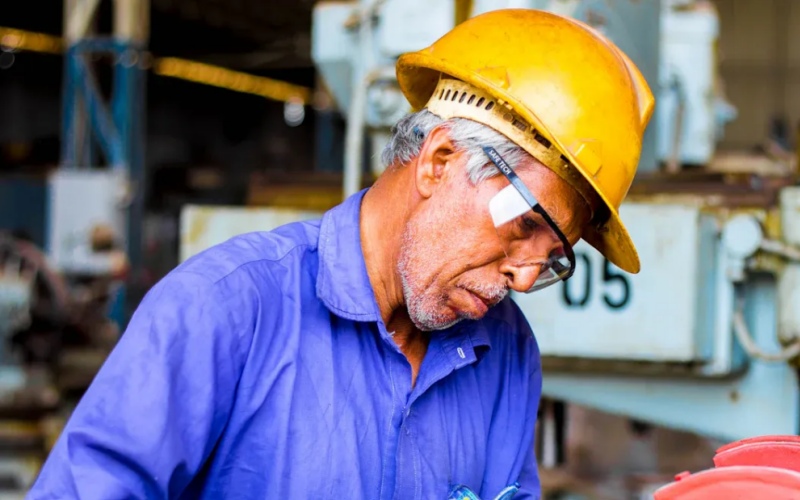
With decades of specialized expertise in abrasive engineering, we pride ourselves on being a beacon of reliability for the industrial manufacturing sector. We strictly adhere to authentic Japanese manufacturing standards, ensuring every batch delivers uncompromising quality. By partnering with us, you are investing in a proven solution designed to lower your consumable costs, increase throughput, and protect your workforce.
Elevate your production efficiency today with tools engineered by experts, for experts.
Explore Abrasive Categories Consult Our EngineersChoosing the correct abrasive wheel is critical for both operational efficiency and JIS-compliant safety. Fuji Grinding Wheels are engineered with precise technical markings to ensure the perfect match for your specific material and machine requirements.
For professional export markets, always verify the Peripheral Speed (m/s) compatibility. Fuji wheels are designed to exceed JIS Burst Speed factors, but operating at the recommended R.P.M. ensures the longest tool life and cleanest cut.
Note: Mismatched grit or hardness can lead to excessive heat buildup, affecting the workpiece's structural integrity.

Global Maintenance Standard: To maintain the high safety factor of Fuji wheels, avoid exposure to excessive humidity and chemical solvents during storage. Proper care preserves the resinoid bond's strength, crucial for high-load industrial applications.
Fuji products are manufactured following strict Japanese standard process requirements. Every wheel is engineered to meet or exceed JIS (Japanese Industrial Standards), such as JIS R 6242 and B 4051. Our core engineering logic prioritizes maximum operator protection by maintaining safety factors and burst speed capabilities that often surpass the highest industry benchmarks.
| Standard Region | Safety Factor (Burst Multiplier) | Safety Logic & Benchmark |
|---|---|---|
| FUJI (High Precision) | > 2.0x | Engineered to exceed JIS requirements for maximum reliability. |
| Japan (JIS R 6242) | 2.0x | Extreme Safety: A wheel rated at 80m/s must withstand a 160m/s burst test. |
| Europe (EN 12413) | $1.73x | Risk Balanced: Provides high safety redundancy for most industrial apps. |
| USA (ANSI B7.1) | 1.5x | Efficiency Focused: Relies on machine guarding and operational procedures. |
Abrasive Selection Guide

Selection of grains (A, WA, AZ, etc.) based on material hardness and grinding precision.
Warning Symbol Interpretation

Standardized safety icons for safe operation and protection guard usage.
When deploying Fuji high-performance tools in overseas markets, ensure that the regional power grid frequency and voltage match the tool specifications. To maintain the superior burst speed safety of Fuji wheels, store abrasives in a dry, temperate environment. Humidity can degrade the resin bond, potentially lowering the wheel’s resistance to centrifugal forces.


