


FUJI Green Star 100 mm semi-flexible grinding wheel for steel and stainless steel.


FUJI Green Star is a 100 mm semi-flexible grinding wheel for surface grinding, deburring and weld finishing on general steel and stainless steel. Its semi-flexible construction and patterned working face support controlled contact when surface condition and handling matter alongside material removal.
This page covers the 100 × 3 × 15 mm and 100 × 6 × 15 mm sizes listed in the specification image below. Match thickness and grit to the workpiece, removal requirement and finish. These are grinding wheels, not cut-off discs.

Use for finishing steel or stainless components, removing small burrs and blending transitions. Test a representative part to confirm that removal rate and surface condition meet the next process requirement.
The semi-flexible design supports handling over the workpiece surface. It does not replace correct mounting or machine control. Avoid excessive pressure and twisting the wheel.
The grooves help clear grinding residue. Loading, heat and wear still depend on material, grit, pressure and working time. No wheel is immune to clogging under every condition.
Use controlled pressure and avoid dwelling on one location, particularly on thin stainless sheet. Wheel selection alone cannot guarantee freedom from heat tint, distortion or overheating.
Consider Green Star for surface work and contour blending. For economical general stock removal on steel, compare the Super F2 grinding wheel. Evaluate both on the same workpiece with a suitable grinder and the same acceptance criteria.
Record working time, wheel consumption, handling and any subsequent finishing. A result from one test applies to its stated conditions; it is not a universal productivity or health guarantee.


| Diameter × thickness × bore | Abrasive code | Grit sizes | Marking | Maximum peripheral speed |
|---|---|---|---|---|
| 100 × 6 × 15 mm | MC | 36 | BF | 72 m/s |
| 100 × 3 × 15 mm | MC | 24, 36, 46, 60, 80, 100, 120 | BF | 72 m/s |
Listed package quantity: 200 pieces (25 × 8). Confirm availability and order quantity when enquiring. 72 m/s is peripheral speed, not revolutions per minute. Follow the maximum RPM marked on the supplied wheel. Other bore sizes or diameters are not confirmed by this data sheet.

Check wheel diameter, the 15 mm bore, flanges, guard and machine speed before ordering. Use the manufacturer-specified mounting arrangement, including a backing pad where required. Do not improvise adapters to make an incompatible wheel fit.
Yes. General steel and stainless steel are the stated applications. For stainless work, use tools dedicated to stainless rather than tools previously used on carbon steel, and verify the required finish on a trial part.
No. These versions are intended for grinding. Use a correctly marked and compatible cut-off wheel for cutting operations.
No. Handling benefits do not replace exposure assessment, extraction, suitable protective equipment or control of working time. The product does not provide guaranteed protection against occupational disease.
FUJI develops abrasives and KOSOKU power tools. Selecting a combination means considering the workpiece, wheel and machine together. Explore FUJI KOSOKU angle grinders when checking a suitable setup.

Choosing the correct abrasive wheel is critical for both operational efficiency and JIS-compliant safety. Fuji Grinding Wheels are engineered with precise technical markings to ensure the perfect match for your specific material and machine requirements.
For professional export markets, always verify the Peripheral Speed (m/s) compatibility. Fuji wheels are designed to exceed JIS Burst Speed factors, but operating at the recommended R.P.M. ensures the longest tool life and cleanest cut.
Note: Mismatched grit or hardness can lead to excessive heat buildup, affecting the workpiece's structural integrity.
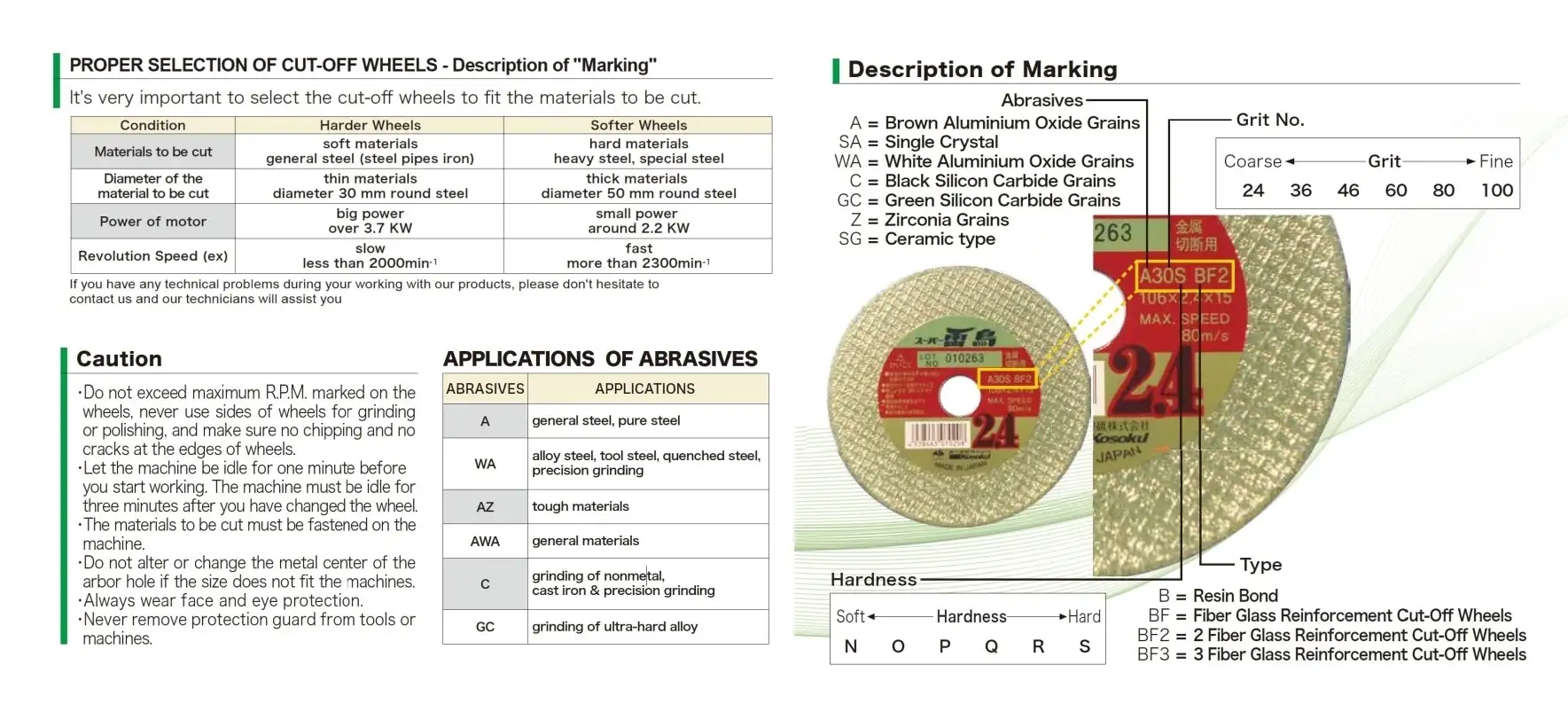
Global Maintenance Standard: To maintain the high safety factor of Fuji wheels, avoid exposure to excessive humidity and chemical solvents during storage. Proper care preserves the resinoid bond's strength, crucial for high-load industrial applications.
Fuji products are manufactured following strict Japanese standard process requirements. Every wheel is engineered to meet or exceed JIS (Japanese Industrial Standards), such as JIS R 6242 and B 4051. Our core engineering logic prioritizes maximum operator protection by maintaining safety factors and burst speed capabilities that often surpass the highest industry benchmarks.
| Standard Region | Safety Factor (Burst Multiplier) | Safety Logic & Benchmark |
|---|---|---|
| FUJI (High Precision) | > 2.0x | Engineered to exceed JIS requirements for maximum reliability. |
| Japan (JIS R 6242) | 2.0x | Extreme Safety: A wheel rated at 80m/s must withstand a 160m/s burst test. |
| Europe (EN 12413) | 1.73x | Risk Balanced: Provides high safety redundancy for most industrial apps. |
| USA (ANSI B7.1) | 1.5x | Efficiency Focused: Relies on machine guarding and operational procedures. |
Abrasive Selection Guide
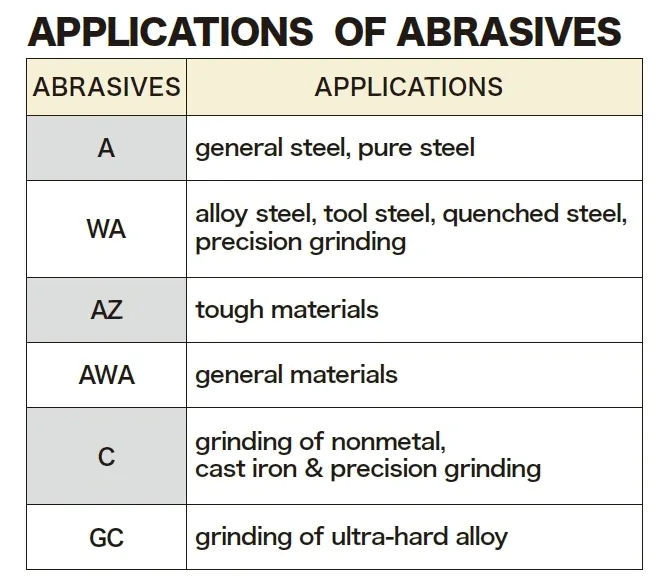
Selection of grains (A, WA, AZ, etc.) based on material hardness and grinding precision.
Warning Symbol Interpretation
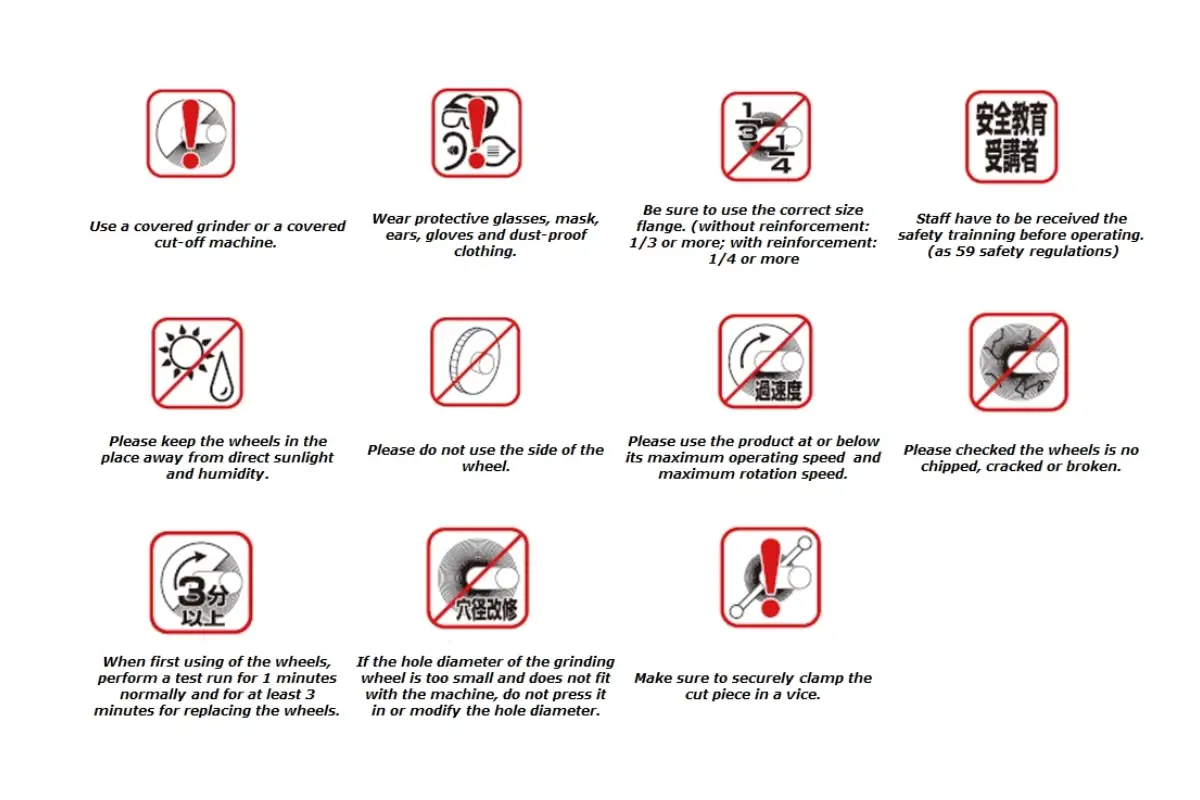
Standardized safety icons for safe operation and protection guard usage.
When deploying Fuji high-performance tools in overseas markets, ensure that the regional power grid frequency and voltage match the tool specifications. To maintain the superior burst speed safety of Fuji wheels, store abrasives in a dry, temperate environment. Humidity can degrade the resin bond, potentially lowering the wheel’s resistance to centrifugal forces.
Fuji products are manufactured following strict Japanese standard process requirements. Every wheel is engineered to meet or exceed JIS (Japanese Industrial Standards), such as JIS R 6242 and B 4051. Our core engineering logic prioritizes maximum operator protection by maintaining safety factors and burst speed capabilities that often surpass the highest industry benchmarks.
| Standard Region | Safety Factor (Burst Multiplier) | Safety Logic & Benchmark |
|---|---|---|
| FUJI (High Precision) | > 2.0x | Engineered to exceed JIS requirements for maximum reliability. |
| Japan (JIS R 6242) | 2.0x | Extreme Safety: A wheel rated at 80m/s must withstand a 160m/s burst test. |
| Europe (EN 12413) | 1.73x | Risk Balanced: Provides high safety redundancy for most industrial apps. |
| USA (ANSI B7.1) | 1.5x | Efficiency Focused: Relies on machine guarding and operational procedures. |
Abrasive Selection Guide
Selection of grains (A, WA, AZ, etc.) based on material hardness and grinding precision.
Warning Symbol Interpretation
Standardized safety icons for safe operation and protection guard usage.
When deploying Fuji high-performance tools in overseas markets, ensure that the regional power grid frequency and voltage match the tool specifications. To maintain the superior burst speed safety of Fuji wheels, store abrasives in a dry, temperate environment. Humidity can degrade the resin bond, potentially lowering the wheel’s resistance to centrifugal forces.


